

Navigating the aftermath of a traffic collision is stressful enough when everyone involved has adequate insurance. However, in California, the reality is often much more complicated. According to the Insurance Research Council, roughly one in eight drivers on the road is uninsured. Even more carry only the minimum state-required liability limits, which are often exhausted within minutes of an emergency room visit.
For those who share the road (particularly those on two wheels), understanding uninsured motorist (UM) coverage and underinsured (UIM) motorist coverage is a vital financial safety net. At the Law Offices of Fernando D. Vargas, we see firsthand how UM and UIM coverage make the difference between a full recovery and financial ruin after a catastrophic auto accident.
This comprehensive guide explores how UM/UIM works in California, why it is critical for motorcyclists, and how to navigate the claims process. If you were in a crash and have questions, contact our law firm today. Consultations are free and confidential.
What Uninsured Motorist (UM) Coverage Is and When It Applies
Uninsured motorist coverage is a component of an auto insurance policy designed to protect you when you are involved in an accident with a driver who has no insurance at all.
In a standard “at-fault” state like California, the person who causes the accident is responsible for paying for the damages through their liability insurance. But if that person broke the law by driving without insurance, you are left with a legal claim against an individual who likely has no assets to pay a judgment.
UM coverage steps into the shoes of the at-fault driver’s non-existent insurance company. It allows you to collect compensation from your own insurer for the damages you would have been entitled to receive from the other driver.
When Does UM Coverage Apply?
- The No-Insurance Scenario: The at-fault driver has no active insurance policy.
- The Hit-and-Run: In California, if you are the victim of a hit-and-run where the driver is never identified, your UM coverage applies (provided there was actual physical contact between the vehicles).
Stolen Vehicles: If you are hit by a person driving a stolen car, there is typically no insurance coverage available from the vehicle owner’s policy, triggering your UM coverage.
What Underinsured Motorist (UIM) Coverage Is and How It’s Different From UM Coverage
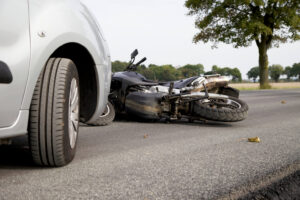
While uninsured motorist coverage applies when there is zero insurance, underinsured motorist coverage applies when the at-fault driver has insurance, but their policy limits are too low to cover the full extent of your damages.
In California, the mandatory minimum liability limits are notoriously low: $15,000 for injury/death to one person and $30,000 for injury/death to more than one person. If you suffer a spinal cord injury or a brain injury, $15,000 won’t even cover the initial air ambulance or the first 24 hours in the ICU.
The Key Difference: The Offset Rule
The primary difference between UM and UIM coverage in California is how the math works. UM coverage is straightforward: if you have a $100,000 limit and the other guy has $0, you have $100,000 available.
UIM coverage, however, is a reduction or offset coverage. This means your UIM limit is reduced by whatever the at-fault driver’s insurance pays.
- Example: You have $100,000 in UIM coverage. The at-fault driver has a $15,000 policy. You settle with them for their $15,000 limit. You now have $85,000 remaining in UIM coverage to pursue from your own insurer.
If your UIM limits are equal to or lower than the at-fault driver’s limits, you cannot collect UIM benefits. This is why carrying high limits is essential.
How UM/UIM Works in California: Key Rules, Limits, and What Insurers Must Offer
California law is very specific about how insurance companies must handle UM/UIM. Under California Insurance Code § 11580.2, every automobile liability policy issued in the state must include uninsured motorist coverage.
The Right of Refusal
While insurers are required to offer it, you are not required to buy it. However—and this is a big “however”—if you choose to decline UM/UIM coverage, the insurer must have you sign a specific written waiver. If they cannot produce this signed waiver after an accident, the law may read the coverage into your policy at the same levels as your liability limits.
Minimum Limits vs. Realistic Limits
The California Department of Insurance provides comparison tools for premiums, but the state minimums (15/30/5) are rarely sufficient for modern medical costs. UM/UIM limits are typically sold in increments that match your bodily injury liability limits (e.g., 100/300 or 250/500).
Stackability
California does not allow “stacking” of UM/UIM policies. If you have three cars insured on different policies, you generally cannot combine the limits. You are limited to the highest single policy limit among the vehicles you own.
What UM/UIM Typically Covers: Bodily Injury vs. Property Damage
UM/UIM coverage is not a single blanket of protection. It is divided into two distinct parts.
1. Uninsured Motorist Bodily Injury (UMBI)
This covers non-economic and economic damages resulting from physical injuries. This includes:
- Medical bills (past and future)
- Lost wages if you cannot work
- Pain and suffering
- Loss of consortium
- Funeral expenses in the event of a wrongful death
2. Uninsured Motorist Property Damage (UMPD)
This covers the damage to your vehicle. In California, UMPD is often capped at $3,500.
- Note: If you already carry collision coverage, you don’t necessarily need UMPD. Instead, you might have a collision deductible waiver (CDW), which pays your deductible if you are hit by an uninsured driver.
Common Exclusions
Your UM/UIM coverage might not apply if:
- You are driving a vehicle you own that is not listed on the policy
- You settle with the at-fault driver without your insurance company’s written consent (this is a major trap)
- In hit-and-run cases, if there was no “physical contact” between the cars (e.g., someone cut you off and you swerved into a tree, but they didn’t touch your car)
Motorcycle Crashes + UM/UIM: Real-World Scenarios Riders Face

For those seeking a motorcycle accident attorney, UM/UIM coverage is often the most important part of the case. Motorcyclists are uniquely vulnerable to the failures of the insurance system.
The Hit-and-Run Factor
Motorcyclists are frequently run off the road by drivers who don’t see them or who panic after a collision. Because motorcycles are less stable than cars, a small clip can result in a total loss of control and life-altering injuries. If the driver flees, uninsured motorist coverage is the rider’s only path to recovery.
The “I Didn’t See Him” Defense and Comparative Fault
In many motorcycle accidents, the insurance company for the at-fault driver will try to blame the rider for lane splitting or speeding. When their limits are low, they may play hardball. Having a robust UIM policy allows you to fight back, knowing you have a secondary source of recovery.
The Severity of Injuries
A low-speed impact that causes a fender bender for a car can cause bone fractures or head trauma for a rider. The medical costs for motorcycle crashes regularly exceed $100,000 within the first week of treatment. If the driver who hit you only has a $15,000 policy, you are facing a $85,000+ deficit immediately. Motorcycle accident insurance is only complete if it includes high-limit UIM.
How a UM/UIM Claim Works Step-by-Step
Filing a UM/UIM claim is different from filing a standard liability claim because you are technically in an adversarial position with your own insurance company.
Step 1: Exhausting the At-Fault Party’s Limits (UIM)
Before you can collect a penny of underinsured motorist benefits, you must usually prove that you have exhausted the limits of the at-fault driver’s policy. This typically requires a formal settlement and a release of the other driver.
Caution: You must get permission from your own carrier before signing this release, or you may forfeit your UIM rights.
Step 2: Proving Liability and Damages
Even though it is your insurance company, they won’t just take your word for it. You must prove:
- The other driver was at fault.
- The extent of your medical injuries.
- The necessity of your future care.
Step 3: Negotiation and Arbitration
If you and your insurer cannot agree on the value of the claim, California UM/UIM disputes are typically settled through binding arbitration, not a jury trial. This is a private “mini-trial” in front of an arbitrator.
Where People Accidentally Hurt Their Case
- Giving Recorded Statements: Your insurer will ask for a statement. Remember, in a UM claim, their goal is to pay you as little as possible. Anything you say can be used to lower the value of your claim.
- Delaying Treatment: If you wait weeks to see a doctor, the insurer will argue your injuries weren’t caused by the crash.
- Social Media: Posting photos of yourself out and about while claiming pain and suffering is a recipe for a denied claim.
How Much UM/UIM Should You Carry? Practical Decision Factors
When choosing motorcycle accident insurance or auto coverage, don’t look at the monthly premium in a vacuum. Look at the worst-case scenario.
1. Your Income and Assets
If you are unable to work for six months, how much money would you lose? Your UM/UIM coverage should, at a minimum, cover your lost wages for a significant period.
2. The Cost of Modern Medicine
A single surgery and a week in a California hospital can easily top $150,000. If you do not have health insurance (or you have health insurance but have high deductibles), your UM/UIM policy is what pays those bills.
3. Risk Profile
Do you commute in heavy traffic? Do you ride a motorcycle? The more time you spend on California freeways, the higher the statistical probability that you will encounter an uninsured driver.
Recommendation: We generally advise clients to carry at least $100,000/$300,000 in UM/UIM, though $250,000/$500,000 is much safer for riders and those with high incomes.
When to Talk to a Motorcycle Accident Attorney About UM/UIM Coverage
Many people assume that because they are dealing with “their” insurance company, the process will be friendly. Unfortunately, the moment you file a UM/UIM claim, your interests and your insurer’s interests diverge.
You should contact a motorcycle accident attorney if:
- The Insurer Denies Liability: They claim the accident was your fault or that there is no proof of an uninsured driver.
- The Lowball Offer: The insurer offers to pay your medical bills but refuses to compensate you for pain, suffering, or future disability.
- Disputes Over Medical Necessity: Your insurer claims your surgery or physical therapy wasn’t necessary.
- Hit-and-Run Complications: There is a dispute over whether physical contact occurred.
- Comparative Fault Issues: California is a pure comparative negligence state. If the insurer tries to blame you for 20% of the crash to save 20% on the payout, you need a lawyer to argue the facts.
An experienced attorney understands how to present evidence in arbitration and how to pressure insurers to act in good faith.
Frequently Asked Questions About UM/UIM Coverage and Accidents

Is uninsured motorist coverage required in California, or can I decline it?
It is not legally required to have it, but it is legally required for insurers to offer it. You can only decline it by signing a specific written waiver. We strongly recommend against declining it.
Does UM coverage cover hit-and-run accidents in California?
Yes, but with a catch. Under California law, there must be physical contact between the hit-and-run vehicle and your vehicle (or you). If a car swerves near you and causes you to crash without touching you, UMBI typically does not apply unless the driver is identified.
What’s the difference between uninsured motorist bodily injury (UMBI) and uninsured motorist property damage (UMPD)?
UMBI pays for your medical bills, lost wages, and pain/suffering. UMPD pays for the repairs to your vehicle (usually capped at $3,500). If you have collision coverage, UMPD is less critical; UMBI, however, is essential.
How much UM/UIM coverage should I carry for a motorcycle policy?
Because riders are prone to more severe injuries, you should carry as much as you can afford. A $100,000/$300,000 policy is a standard “safe” baseline, but for those with families or high-paying careers, $250,000 or more is highly recommended.
Protect Your Future with the Law Offices of Fernando D. Vargas
If you’ve been injured by a driver with little or no insurance, don’t navigate the complex world of UM/UIM claims alone. Whether you are dealing with a motorcycle accident or a complex auto collision, our team is here to ensure your own insurance company treats you fairly.
Contact the Law Offices of Fernando D. Vargas today for a free consultation. Let us help you secure the compensation you deserve.