
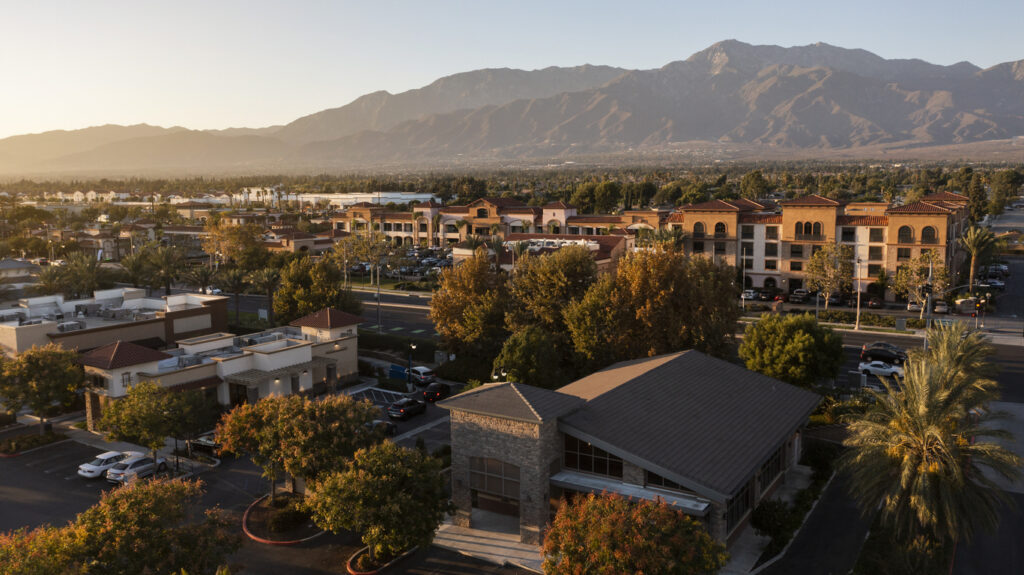
 Rancho Cucamonga has a mix of busy commercial streets, major arterials, freeway interchanges, and heavily traveled commuter routes. For drivers, that combination can create difficult conditions, particularly where high-speed traffic meets shopping centers, freeway ramps, and busy intersections.
Some high-risk areas include Foothill Boulevard and Haven Avenue, Milliken Avenue and 4th Street, Base Line Road and Archibald Avenue, and the I-15 and I-210 interchange areas. These locations are not an official city ranking of the most dangerous roads. Rather, they illustrate the types of traffic conditions that can increase the likelihood or severity of a collision. Our Rancho Cucamonga car accident lawyers can help.
For Rancho Cucamonga residents injured in a crash, understanding the roadway where the collision happened can matter when determining how the accident occurred, who may be responsible, and what evidence should be preserved. To discuss your crash with a Rancho Cucamonga injury lawyer, contact our law firm today.
Key Takeaways
- Some high risk roadways in Rancho Cucamonga include Interstate 15, Interstate 210, Foothill Boulevard, Haven Avenue, and Milliken Avenue.
- Common causes of car accidents include speeding, driver distraction, tailgating, running red lights, and poor road conditions.
- If you are in a car crash in Rancho Cucamonga, be sure to seek medical attention, notify authorities, take photos and videos of the accident site, and exchange contact information with the other motorist and any witnesses.
Navigating High-Risk Roads and Intersections in Rancho Cucamonga
Rancho Cucamonga’s road network carries substantial commuter and commercial traffic. Streets such as Haven Avenue and Milliken Avenue connect residential neighborhoods with shopping areas, businesses, industrial properties, and freeway access.
The California Office of Traffic Safety maintains crash data and ranking tools based on information from sources including the Statewide Integrated Traffic Records System. OTS cautions that its rankings are indicators rather than definitive measurements of individual problem locations.
That distinction matters when discussing dangerous roads Rancho Cucamonga drivers use every day. A location may have a high number of collisions because of traffic volume, while another may have fewer crashes but a greater proportion of severe injuries.
Most Dangerous Intersections in Rancho Cucamonga
Several intersections deserve particular attention because of their traffic patterns and proximity to major corridors.
Foothill Boulevard and Haven Avenue
This intersection sits within a heavily traveled commercial area. Drivers encounter through traffic, turning vehicles, pedestrians, shopping-center access points, and traffic entering or leaving nearby businesses. Those competing movements can create risks for rear-end crashes, sideswipe collisions, left-turn crashes, and pedestrian accidents.
Milliken Avenue and 4th Street
Milliken Avenue carries substantial north-south traffic, while 4th Street is a major east-west route. The City of Rancho Cucamonga lists a 50-mph speed limit for Milliken Avenue in this area, which means drivers can encounter high-speed vehicles near the intersection.
Base Line Road and Archibald Avenue
Both roads carry significant local traffic and connect with other major north-south and east-west routes. A collision here can involve drivers traveling through the intersection, vehicles turning across traffic, or motorists changing lanes near nearby access points.
Interstate 15 and Interstate 210 Interchanges
Freeway on-ramps and off-ramps create a different set of hazards. Vehicles transitioning from freeway speeds to surface streets have limited time to adjust, while merging and lane changes can produce sideswipe and rear-end collisions.
Major Arterials and Freeways: Foothill Blvd, Milliken Ave, I-15, and I-210 Hazards
Though we covered some of these roads in the section above, the risks of collisions extend beyond the listed intersections.
- Foothill Boulevard: Foothill Boulevard is one of Rancho Cucamonga’s major east-west routes. Its commercial development means drivers regularly encounter vehicles turning into businesses, pedestrians, delivery vehicles, and traffic entering or leaving shopping areas.
- Haven Avenue: Haven Avenue is another major north-south corridor. Haven Ave car accidents Rancho Cucamonga residents experience may involve turning vehicles, lane changes, congestion, or traffic entering commercial properties.
- Milliken Avenue: Milliken Avenue presents a different combination of risks. Certain portions of the road have posted speed limits of 50 mph, and the corridor connects with major routes including 4th Street, Foothill Boulevard, Base Line Road, and the area around I-210.
- I-15 and I-20: The I-15 and I-210 corridors add freeway merging, higher speeds, heavy traffic, and sudden changes in traffic flow. Public crash records show collisions occurring around several Rancho Cucamonga freeway access points, including the Milliken and Archibald areas.
Primary Causes of Traffic Collisions in San Bernardino County
A dangerous road does not automatically cause a crash. In many cases, driver behavior is the immediate cause.
Common factors in local car accidents include:
- Speeding
- Distracted driving
- Following too closely
- Unsafe lane changes
- Failure to yield
- Improper turns
- Impaired driving
- Running red lights or stop signs
Crashes Caused by Road Conditions
Road conditions can also matter. Poor visibility, inadequate signage, signal timing, pavement problems, roadway configuration, or an obstructed view may contribute to a collision. Determining whether a roadway condition played a legal role requires looking at the specific facts rather than assuming the city or another property owner is responsible.
Who Is Responsible If a Dangerous Road Design Contributed to My Crash?
Potential responsibility depends on the facts. A public entity, contractor, property owner, or another party may become relevant in some cases, but a roadway condition alone does not establish liability. An investigation must determine what condition existed, who controlled or maintained it, whether a legal duty applied, and whether the condition contributed to the collision.
What to Do Immediately After an Intersection Crash in Rancho Cucamonga
After a collision, seek medical attention and call law enforcement. Exchange information with the other driver and obtain contact information from witnesses.
If it is safe to do so, photograph the vehicles, intersection, traffic signals, road markings, nearby signs, visible injuries, and surrounding conditions. Keep medical records, repair estimates, insurance correspondence, and other documents related to the crash.
If the crash happened near a business, shopping center, or intersection with surveillance cameras, identifying potential video evidence quickly can matter. Businesses may not preserve recordings indefinitely. Make sure to contact a lawyer as soon as possible to secure any evidence relevant to your claim.
Establishing Liability for Accidents on High-Speed Rancho Cucamonga Corridors
Liability depends on evidence. A driver who violated a traffic law may be responsible for causing a collision, but other parties can sometimes become relevant.
For example, if a defective roadway condition contributed to a crash, an investigation may need to examine the responsible public entity and whether applicable legal requirements were satisfied. If a commercial vehicle caused the collision, the driver’s employer or other parties may need to be considered.
California also follows a pure comparative negligence rule. This means fault can potentially be divided among multiple parties. The specific allocation of fault depends on the facts and evidence of the case.
This is why photographs, police reports, witness statements, medical records, vehicle damage, traffic-camera footage, and other evidence can become important after a serious crash.
How Long Do I Have to File a Crash Claim in Rancho Cucamonga, CA?
For many California personal injury claims against private parties, the general statute of limitations is two years for an injury caused by another person’s wrongful act or neglect.
Claims involving a government entity can have a much shorter claim-presentation deadline. California requires a written administrative claim to be filed with the appropriate government agency within six months of the incident.
Exceptions may apply and deadlines can vary. An injured person should not wait until the deadline is approaching to seek legal advice. It’s best to contact our Rancho Cucamonga law firm as soon as possible.
How the Law Offices of Fernando D. Vargas Fights for Local Accident Victims
The Law Offices of Fernando D. Vargas represents injured people in Rancho Cucamonga and throughout the Inland Empire. The firm’s main office is located at 8647 Haven Ave in Rancho Cucamonga. We’re based in an area where many local clients live, work, commute, and shop.
Attorney Fernando Vargas has more than 35 years of litigation experience, including experience from the insurance defense side. Our firm has recovered more than $100 million for clients and provides fully bilingual support.
Discuss Your Car Crash in Rancho Cucamonga with a Local Attorney
For someone injured in a Rancho Cucamonga collision, local representation can help with pursuing compensation for medical expenses, lost income, property damage, pain and suffering, and other losses. For a free consultation with our law firm, contact the Law Offices of Fernando D. Vargas today.